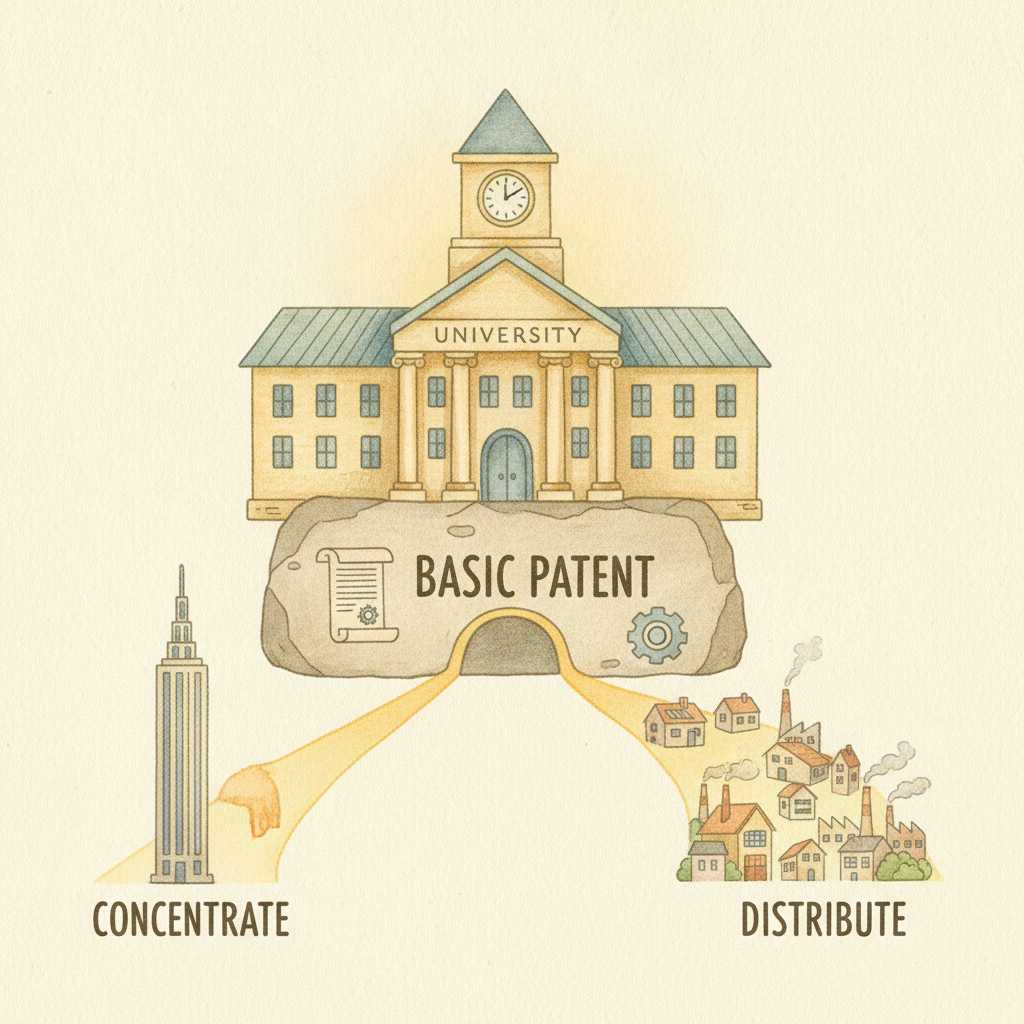
Part 1: How One University's Patents Produced Both a "Winner" and a "Loser" — The IP Design That Sealed the Fates of Medical Startups
The Questions of This Series
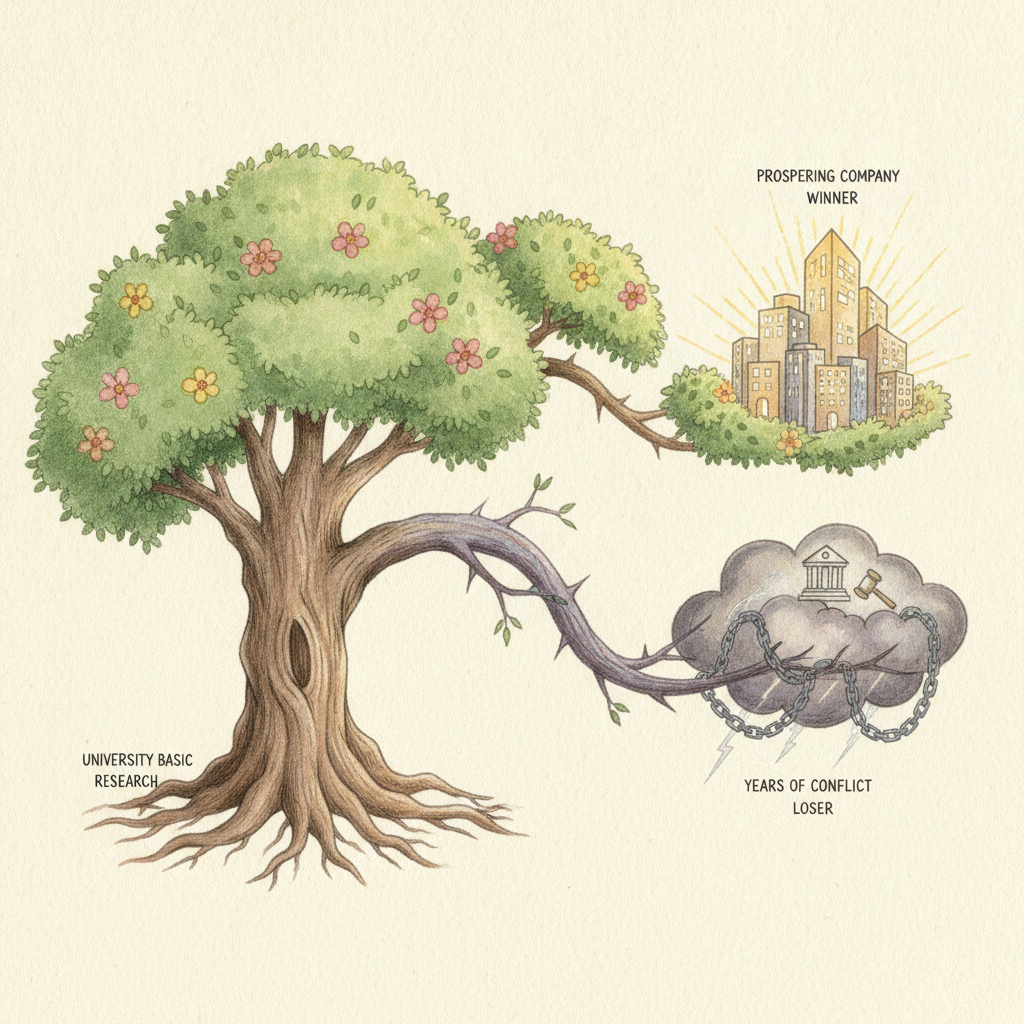
When a university's basic research is commercialized, the question of "who holds the IP, and how"—joint application or sole, applicant being the university or the company, exclusive license or non-exclusive—greatly determines the outcome that follows. Focusing chiefly on the US and EU, this five-part series reads the "winning paths and losing paths" of joint patents between universities (researchers) and companies versus basic patents held solely by universities, and also delves into the structural weaknesses facing Japanese startups.
The "three questions" this series will ask are as follows:
- Why do "patents from the same university" produce both winners and losers?—Is it the superiority of the technology, or the design of the IP, that separates success from failure? (Parts 2 & 3)
- How many medical AI startups are there in Japan, and how many have stalled after their subsidies ended?—The "core numbers" that no one knows for sure (Part 4).
- Why is it possible to try again and again in the US, while a comeback is so difficult in Japan?—The difference in the system after bankruptcy (limited liability + Chapter 11 vs. personal guarantees) (Part 4).
Part 1 lays out the big picture and frames the problem. Concrete "answers" and design checklists will be addressed from Part 2 onward.
Why Do Fates Diverge from "the Same University's Patents"?
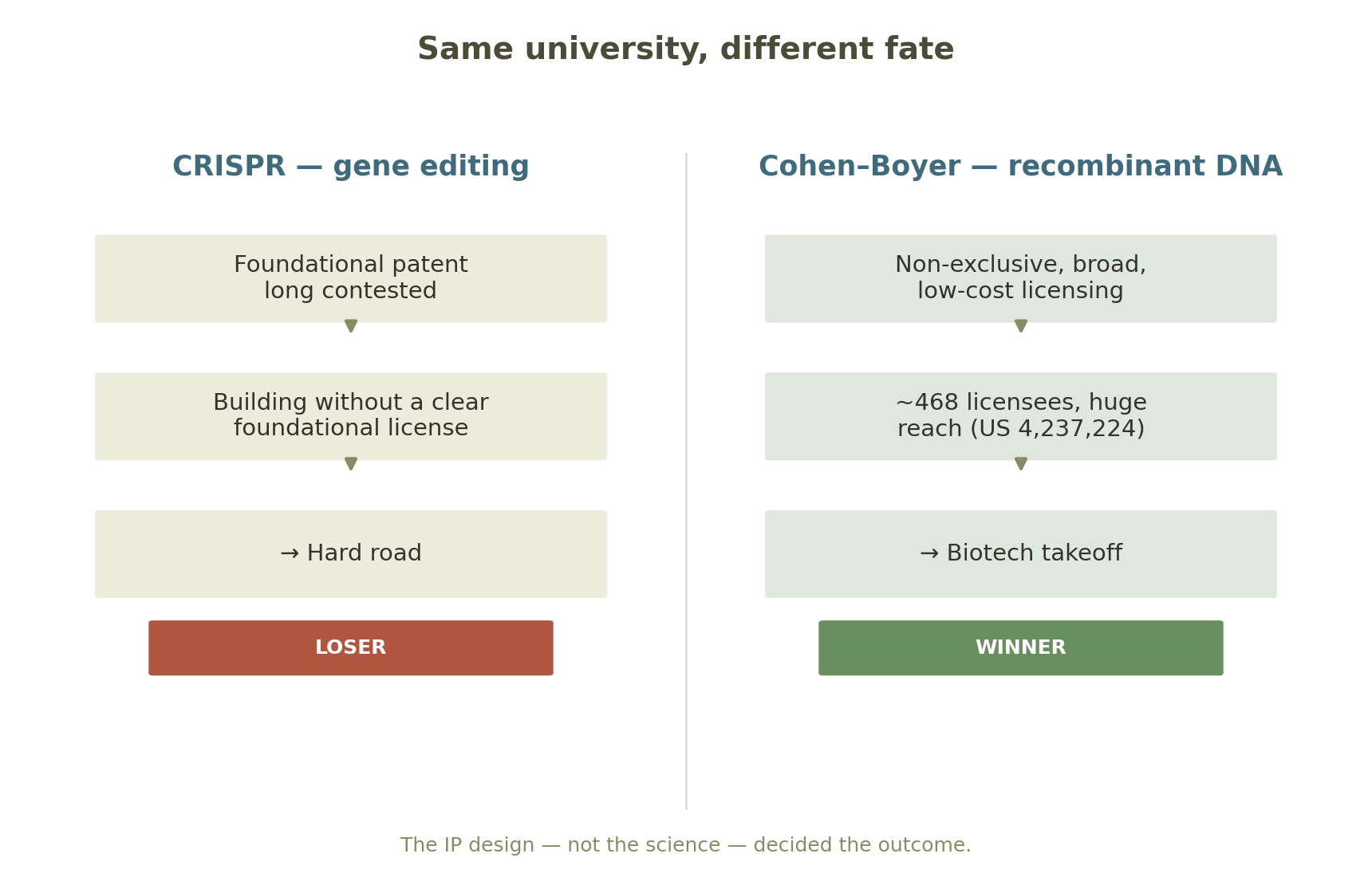
It may come as a surprise, but inventions traced back to the same university have in one case produced a world-class enterprise, and in another spawned years of disputes. In Part 1, we present only the entry point of this "surprise."
- Gene editing (CRISPR): Competing startups each licensed technology from different universities, and a long battle developed over the ownership of the foundational patents. It has been reported that, following a ruling at a certain stage, some companies were left in the position of "advancing their business without holding the foundational patents."
- Recombinant DNA (Cohen-Boyer): By contrast, one university's licensing design helped launch the biotech industry itself, and is recounted as a "textbook of success." Even within the same "university-derived" category, the ending can differ this dramatically depending on the design.
So where did the branch point lie? The comparison and conclusions will be addressed in detail from Part 2 onward.
Part 1's Focus: Joint Patents Between University Researchers and Startups (US and EU)
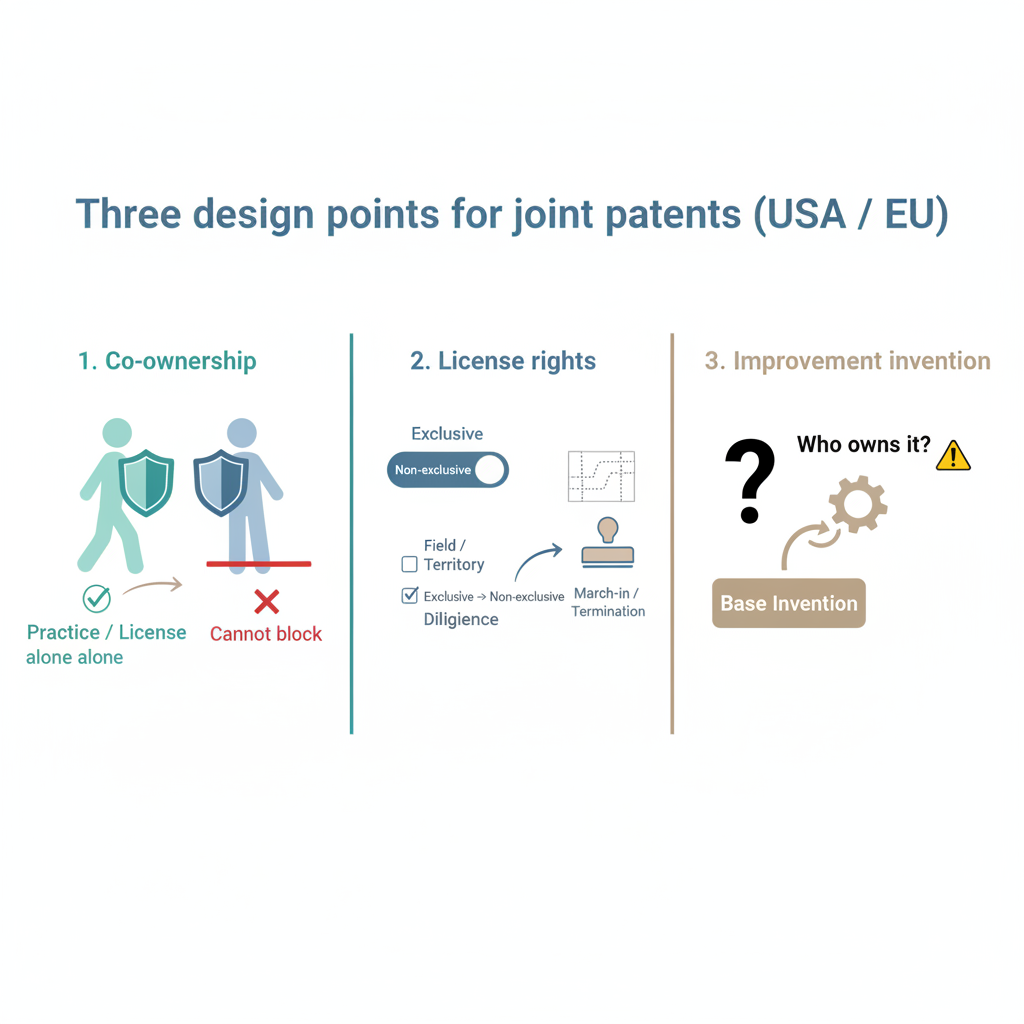
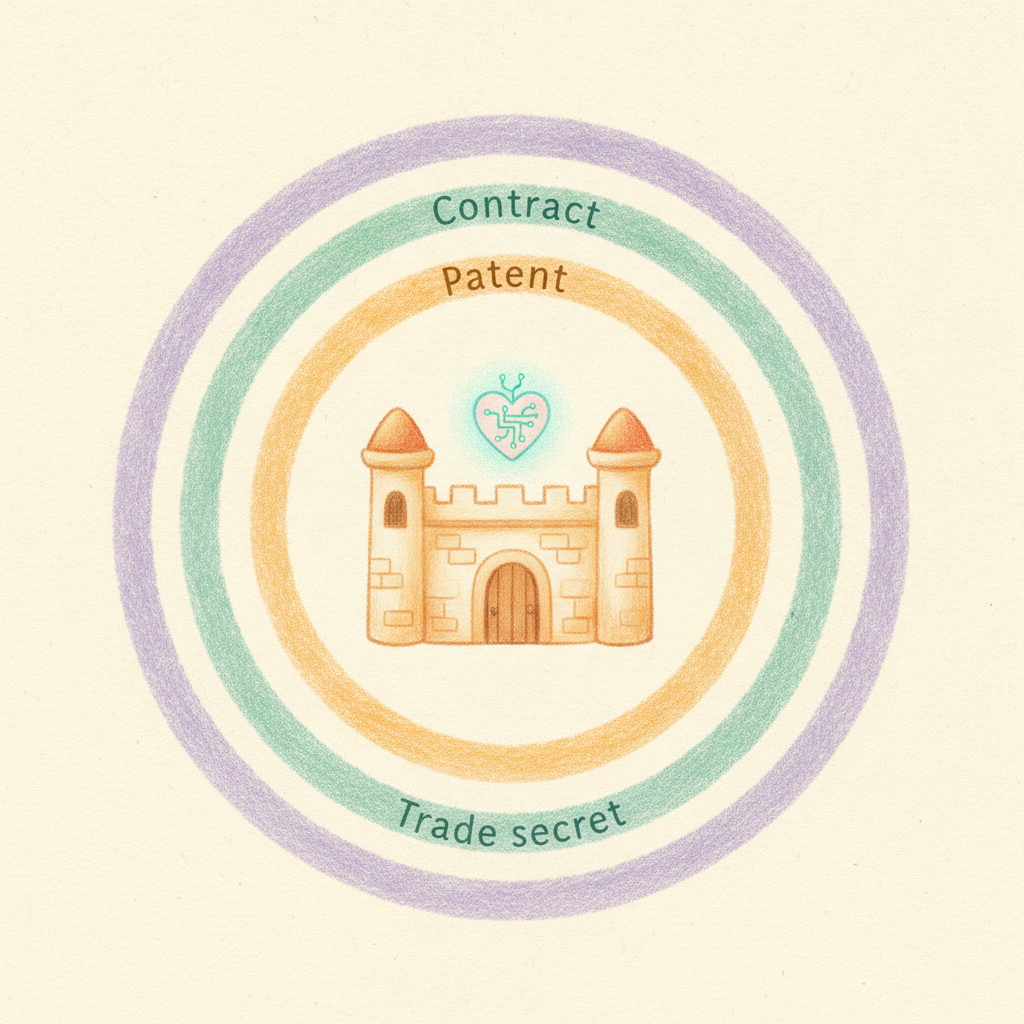
An invention born jointly can become either an "asset" or a "time bomb," depending on how the contract is constructed. Here, we present only the three design points most prone to generating disputes in later years (concrete solutions come from the next installment onward).
- Ownership shares (joint ownership): In the US, the treatment of jointly owned patents follows distinctive rules, and there are cases where one co-owner can practice and license the patent on its own. "Who can be stopped, and who cannot be stopped" is the starting point of negotiations.
- License rights: Exclusive license or non-exclusive license, limitations by field or region, diligence obligations, and "clawback" clauses (conversion from exclusive to non-exclusive, or termination)—these are the points investors are most nervous about.
- Improvements: Who owns the improvements generated during commercialization? Leaving this ambiguous is what costs the most dearly later.
Each of these "key points," along with concrete examples, will be explored in depth in Part 2 (joint development with major pharmaceutical companies) and Part 3 (basic patents held solely by universities).
Framing the Problem: Is Japan's Medical AI Running on a "Subsidy Clock"?

Here we turn our attention to Japan. The hypothesis is simple: in Japan, the body of cases of independent startups whose core business is medical AI is still thin, and the presence or absence of national subsidies tends to directly determine whether a business lives or dies.
Rather than an "answer," we will leave only facts that serve as hints.
- The nation's support menu is generous, and in the drug discovery and healthtech fields, large-scale subsidy programs are increasingly being put in place. At the same time, many of these are designed to set as their target goal "fundraising / market launch within ◯ years after the program ends," which suggests a structure prone to dependence on the "subsidy clock."
-
Abroad as well, there are examples of leading startups automating medical operations with AI that, despite raising large sums, ended up shutting down their businesses. Whether the money lasts is not determined by technical prowess alone.
-
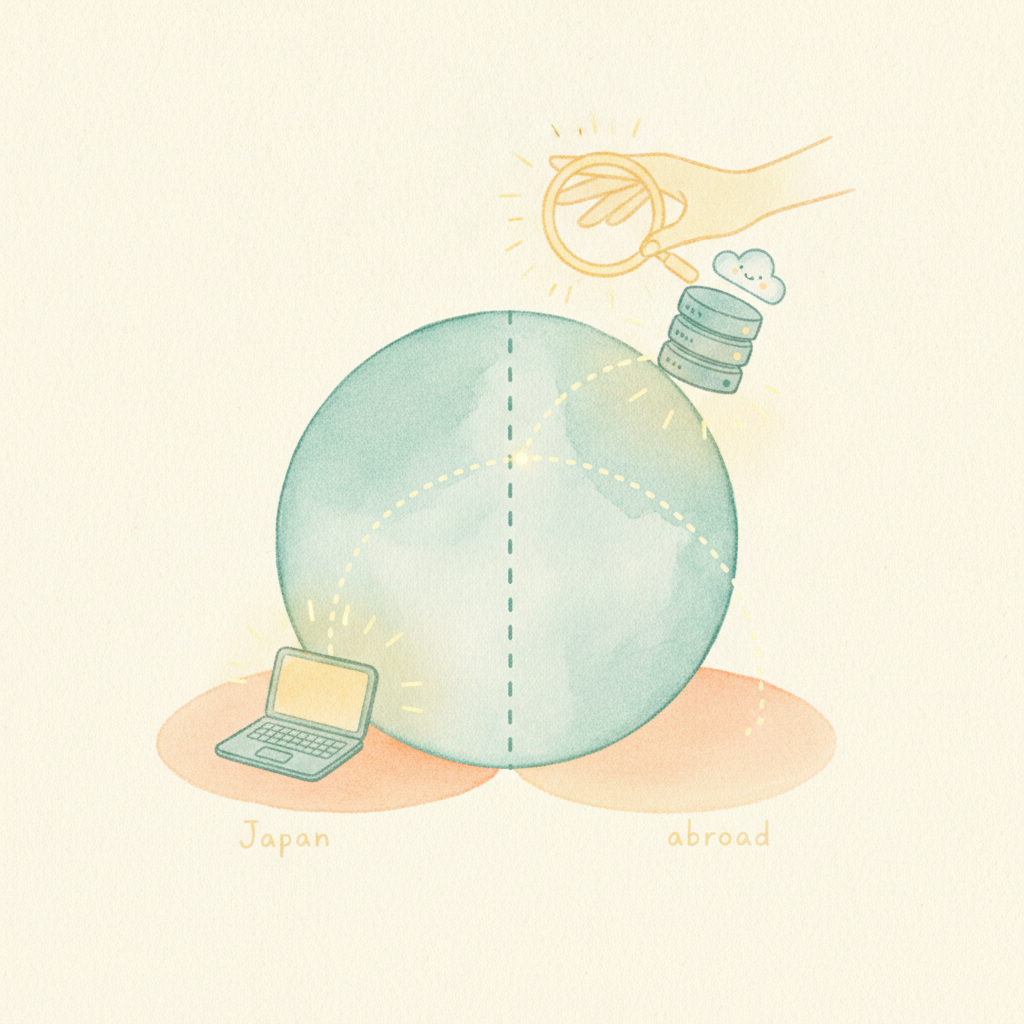
And what is often overlooked is the difference in the system after bankruptcy. In the US, liability is limited, so even if a company fails, the founders do not go into personal bankruptcy and can try again and again. In Japan, on the other hand, personal guarantees from executives have long been customary, meaning a company's bankruptcy directly leads to the personal bankruptcy of its management, making a comeback extremely difficult. The very magnitude of the pain when the subsidy clock runs out is different between Japan and the US.
Glossary | Personal Guarantee by Executive: A Japanese custom where an executive personally guarantees a company's loans. In the event of bankruptcy, the executive is personally liable for repayment, which has been considered the biggest barrier to trying again (institutional reforms to waive these guarantees are underway, as will be detailed in Part 4).
So how many medical AI startups actually exist in Japan, and how many of them lost momentum after their subsidies ended? This "core of the figures" will be researched anew in this series and presented in the following installments.
Coming Next
Glossary
- Joint Application (Joint Patent): A patent for which multiple parties, such as a university and a company, jointly invent and share the rights. The arrangements for ownership shares, practice, and licensing determine the future outcome.
- License: A contract in which a patent holder permits another party to "use" the patent. The design of exclusivity/non-exclusivity and compensation (royalties) is crucial.
- Burn Rate / Subsidy Dependence: The rate at which a startup consumes its funds. Relying on subsidies can lead directly to running out of funds—and thus, failure—when the subsidies end.
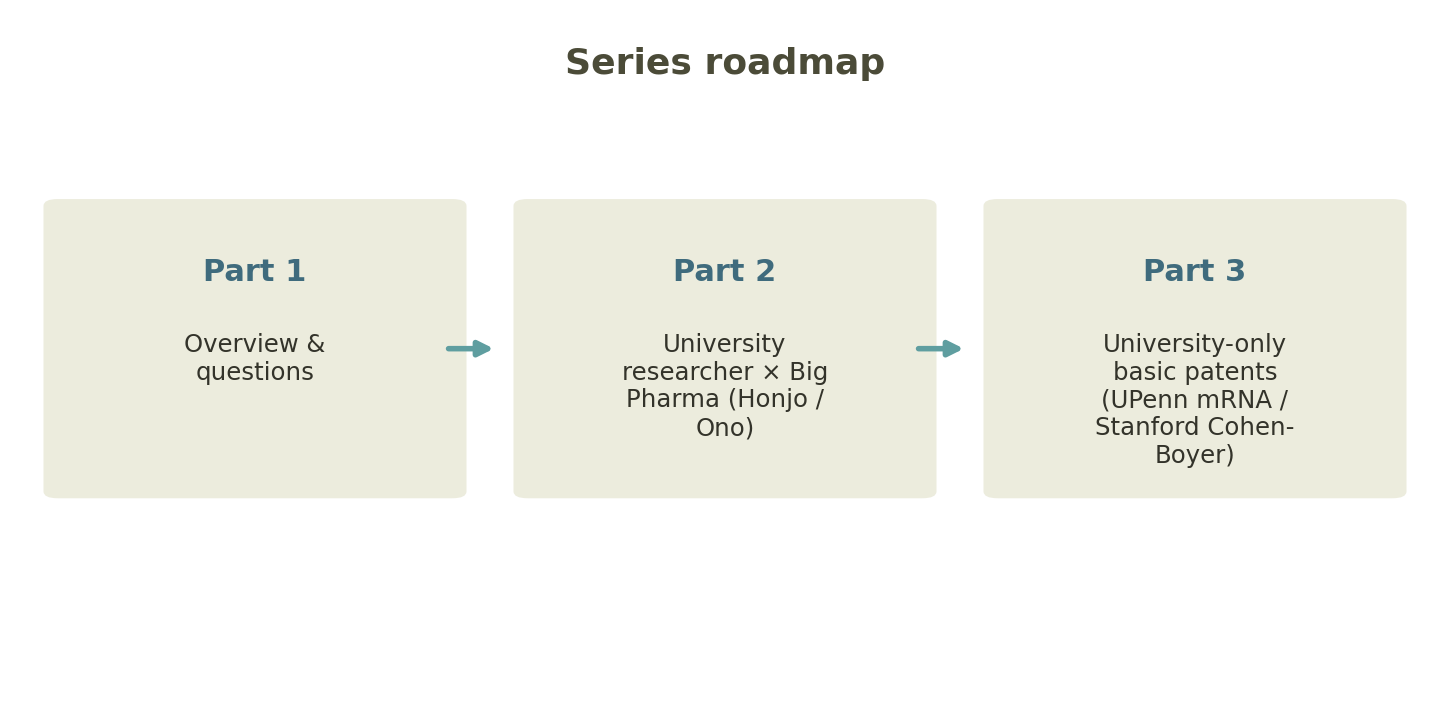
- Part 2: Joint development between university researchers and major pharmaceutical companies (taking as our subject the saga over compensation between Tasuku Honjo and Ono Pharmaceutical, we read the pitfalls of "joint" arrangements).
- Part 3: Basic patents held solely by universities (the University of Pennsylvania's mRNA, Stanford's vector / recombinant DNA patents). The strengths and limits of a "hold it solely" strategy.
- Part 4: How many medical AI startups are there in Japan?—The "core numbers" no one knows for sure (the subsidy clock and the difference with the US in what comes "after bankruptcy" = personal guarantees).
- Part 5: Conclusion—The reasons that separated success from failure, and the "numbers" Japan needs to increase.
Please Note
This article is intended for general informational purposes and does not constitute advice on specific legal or IP matters. Responses to applications, contracts, and disputes will reach different conclusions case by case.
For individual consultations regarding specific arrangements of ownership shares, license rights, and improvements, or about IP strategies that do not depend on subsidies, please use Shishido & Associates' inquiry form (/patent-office/#contact).
References
- The Patent-Powered Pitch (DrugPatentWatch) — Notes that under US law, each co-owner of a jointly held patent may practice and license it independently.
- Six key considerations for patent co-ownership agreements (Murgitroyd) — Consent clauses for jointly owned patents and dispute prevention.
- Licensing Biotech IP in University–Industry Partnerships (PMC) — The point that ambiguity over what is subject to royalties invites later disputes.
- Considerations When Contracting with Academic Spinouts (Ropes & Gray) — The risk of license termination or conversion to non-exclusivity upon failure to meet diligence obligations.
- University spinouts – 10 considerations for founders (Lexology) — Sorting out exclusive/non-exclusive, field and region limitations, and diligence obligations.
- Spin-out companies – what do you need to consider (Bristows) — The structure whereby an exclusive license becomes a fetter on the university side.
- Licensing vs Assignment of IP in JV/Spinouts (PatentPC) — The model where the university retains the foundational patent and grants only an exclusive right to practice, and the concerns it raises for fundraising.
- UC Berkeley loses CRISPR patent case (STAT) — The impact reaching the companies licensed by the university.
- Broad prevails over Berkeley in CRISPR patent dispute (C&EN) — The configuration in which some companies were left without foundational patents.
- Prospect patents and CRISPR (PMC) — Sorting out the structure in which the university entrusted rights to spin-off startups.
- Court rules against universities in patent case: Stanford v. Roche (AAAS) — Inventor priority and the importance of "hereby assign."
- Cohen-Boyer Patents and Licenses (IP Handbook, PDF) — A "textbook of success" case for license design.
- Stan Cohen Lab (Stanford Medicine) — The recombinant DNA patent and the spread of its licensees.
- 1972: First Recombinant DNA (genome.gov) — An overview of the Cohen-Boyer patents.
- The rough seas of reduced fundraising and changing conditions seen in startup failures (Nikkei) — An example of a medical AI company that shut down after raising large sums.
- On startup support at AMED (AMED) — The framework of public support.
- Next-Generation Healthtech Startup Development Support Program (AMED) — A design that sets fundraising and market launch after the program ends as its goal.
- Overview of government funding support measures for startups (yoii) — The framework of large-scale subsidies for drug discovery ventures.